In a distracted world, intentional focus can be your superpower.

Based on the four brain modes, My Day Method™ helps you master your energy, time, and attention.

Distracted days add up.
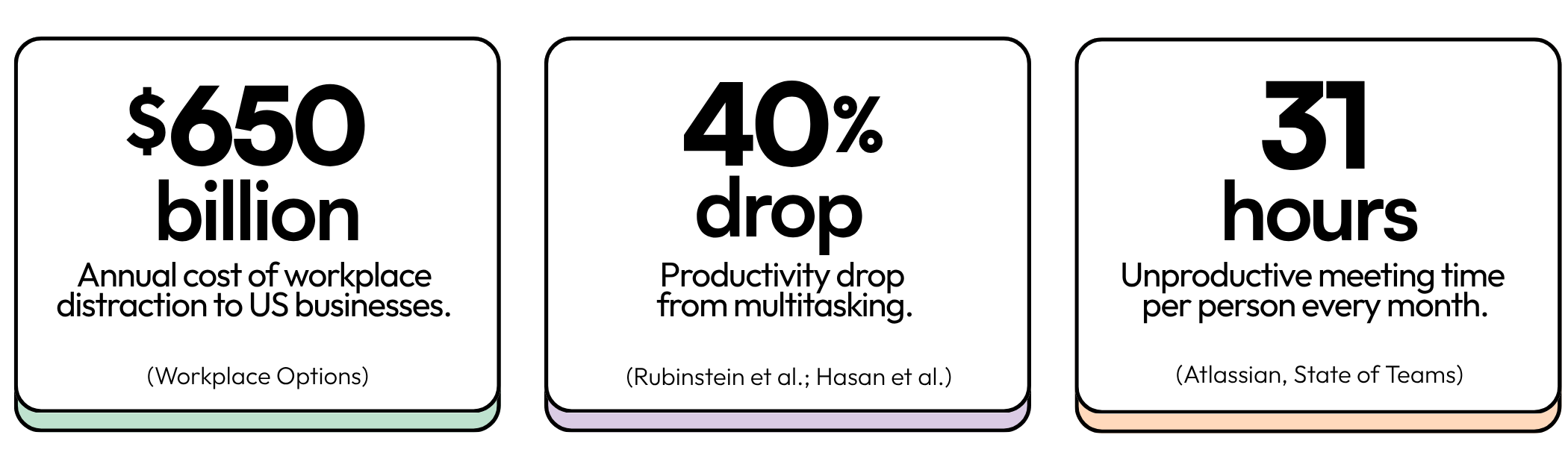
Infographic showing workplace statistics: $650 billion annual cost of workplace distraction in US businesses, 40% productivity drop from multitasking, 31 hours unproductive meeting time per person monthly.
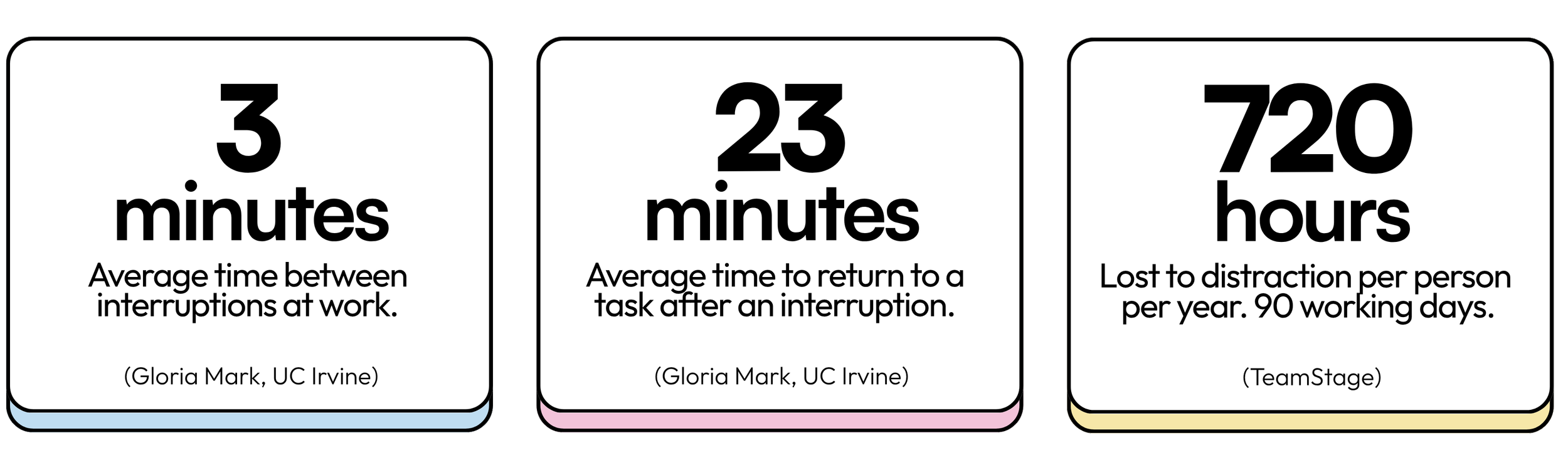
Three digital cards display statistics about work interruptions and distractions: the first shows 3.5 minutes, the second shows 23 minutes, and the third shows 720 hours. Each card includes a description and citation, with the cards outlined in blue, pink, and yellow respectively.

Meanwhile, conventional advice treats your brain like a machine.
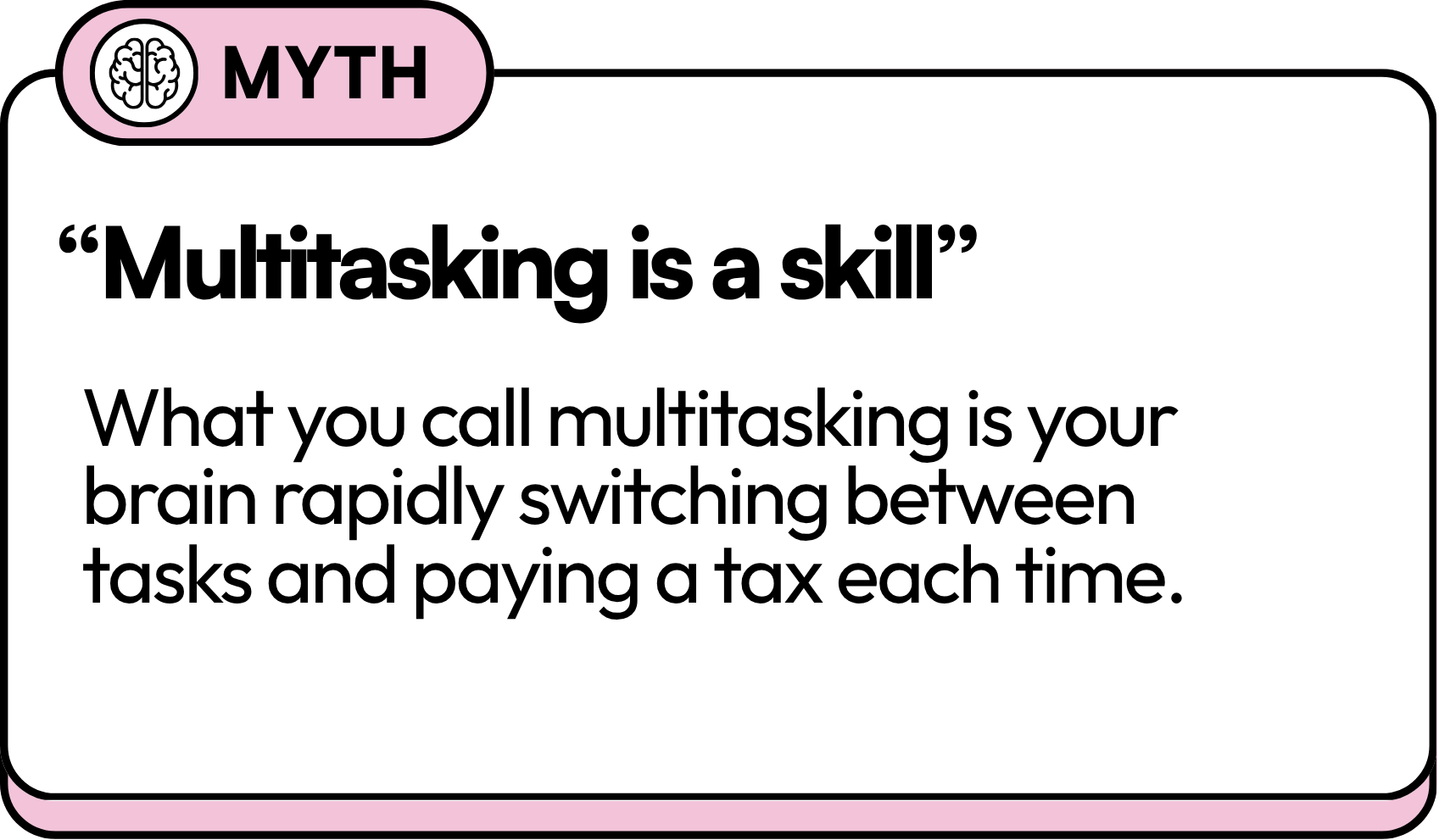
An educational graphic with a purple badge labeled 'MYTH' and a brain icon. The text states, 'Multitasking is a skill' and explains that what is called multitasking is actually quickly switching between tasks and paying a tax each time.
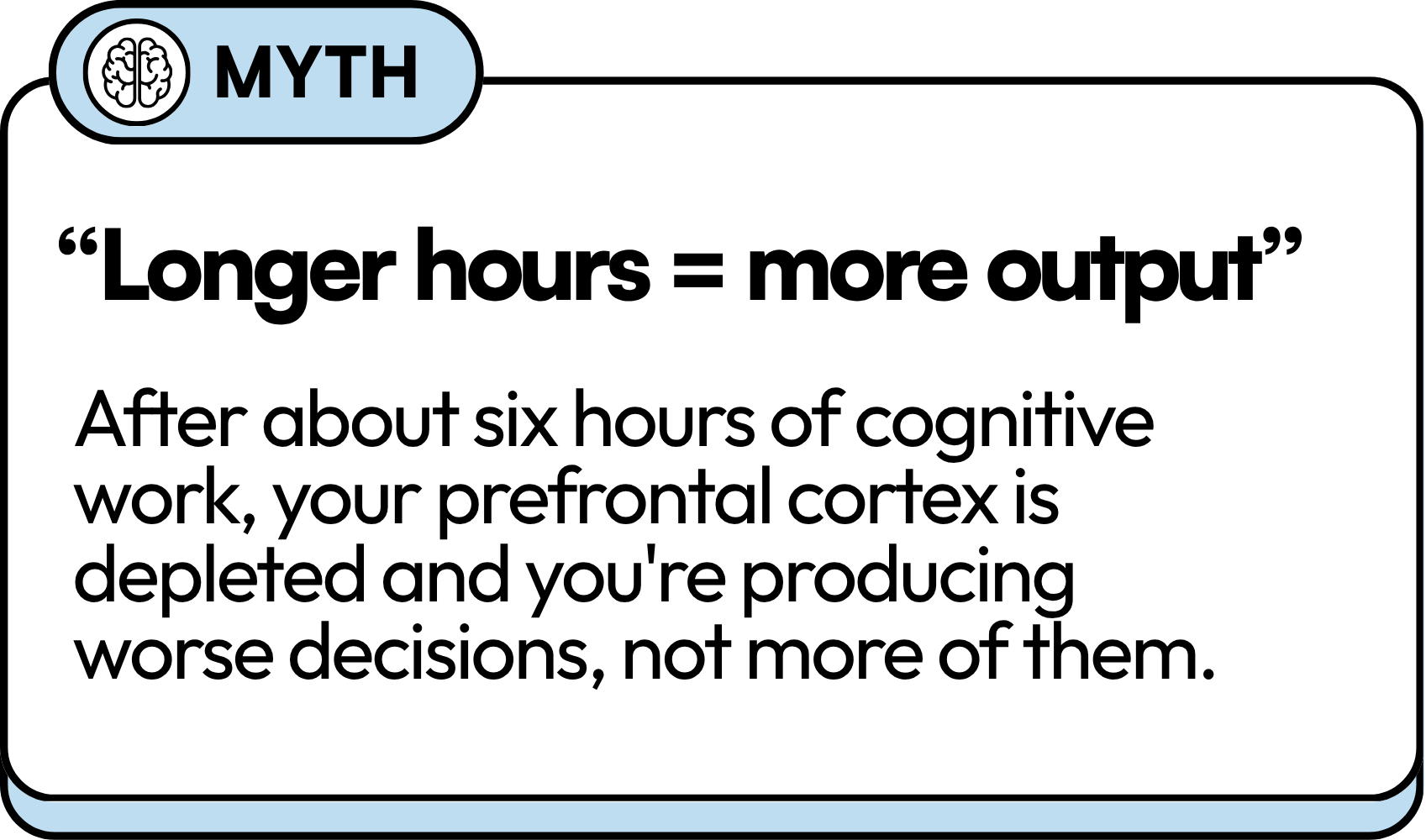
A graphic with a blue label at the top left corner titled 'MYTH' and an icon of a brain. The main text states 'Longer hours = more output.' The supporting text explains that after about six hours of cognitive work, the prefrontal cortex is depleted, leading to worse decision-making instead of more.
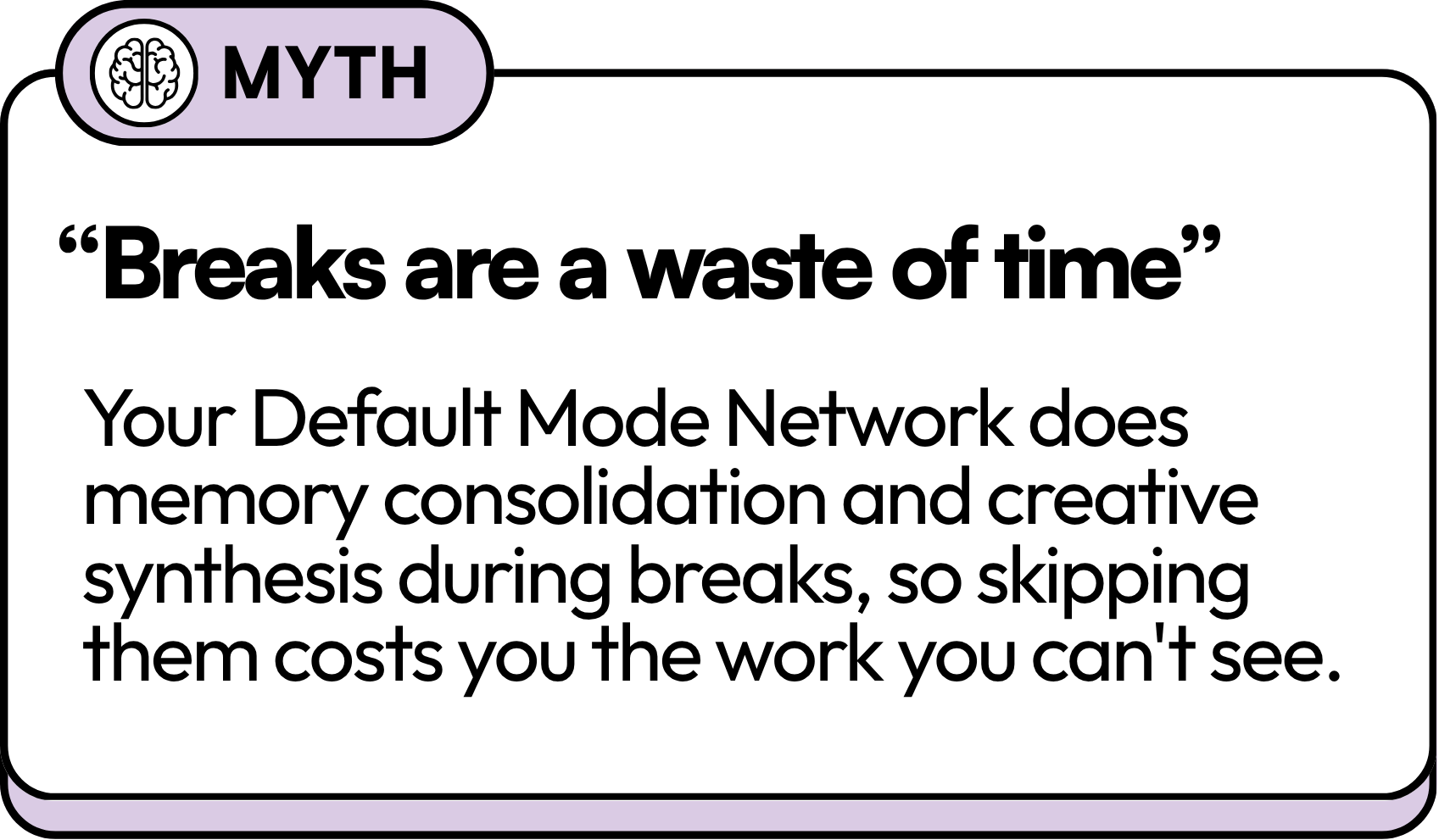
Infographic with a purple head and a brain icon at the top left corner, titled "MYTH" in bold black letters. The main quote reads "Breaks are a waste of time" in large bold font. Below, smaller text explains that your default network does memory consolidation and synthesis during breaks, so skipping breaks costs you unseen work.
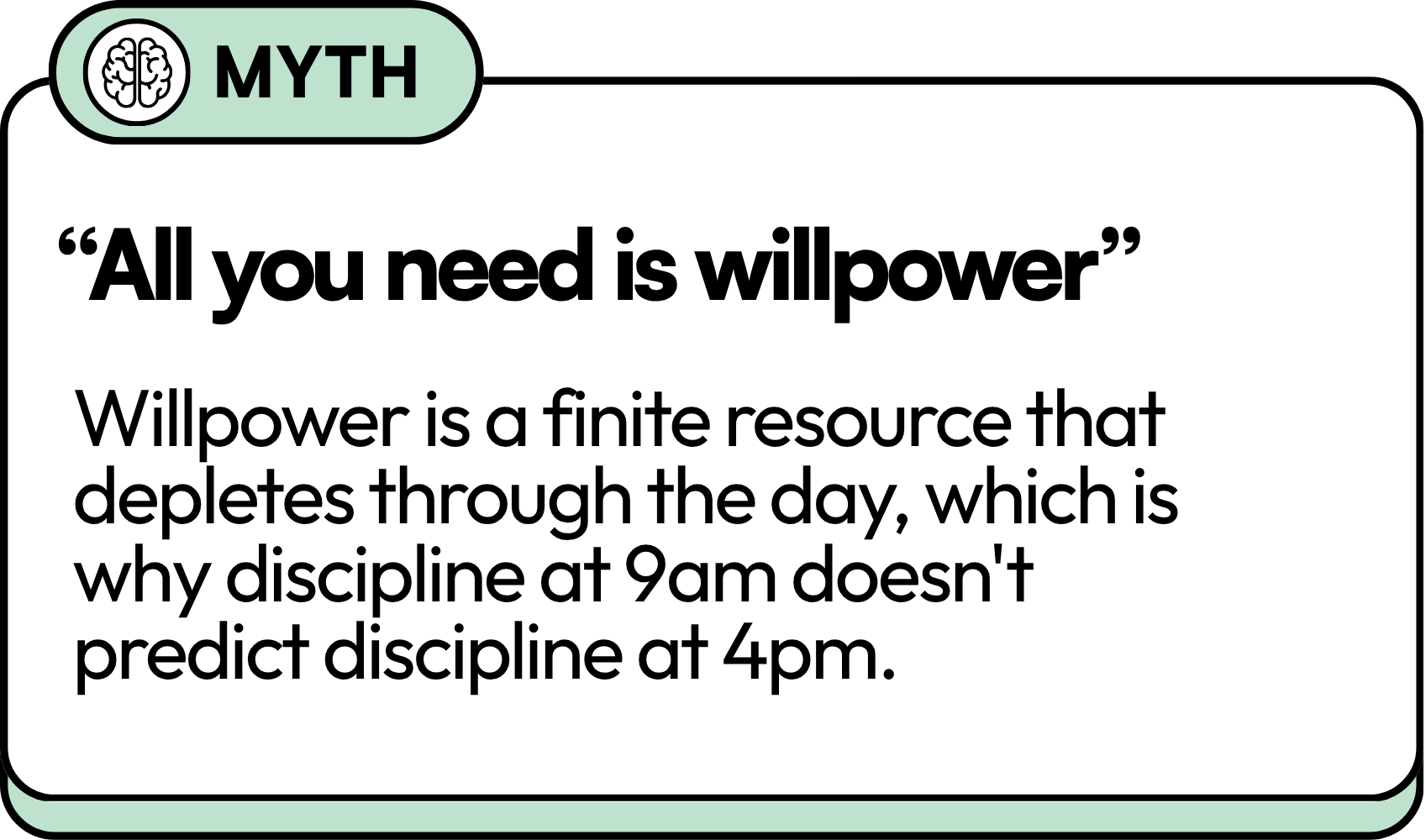
A graphic with the title 'MYTH' and the quote 'All you need is willpower', followed by a text explaining that willpower is a finite resource that depletes through the day, which is why discipline at 9am doesn't predict discipline at 4pm.

Your brain naturally switches modes throughout the day.
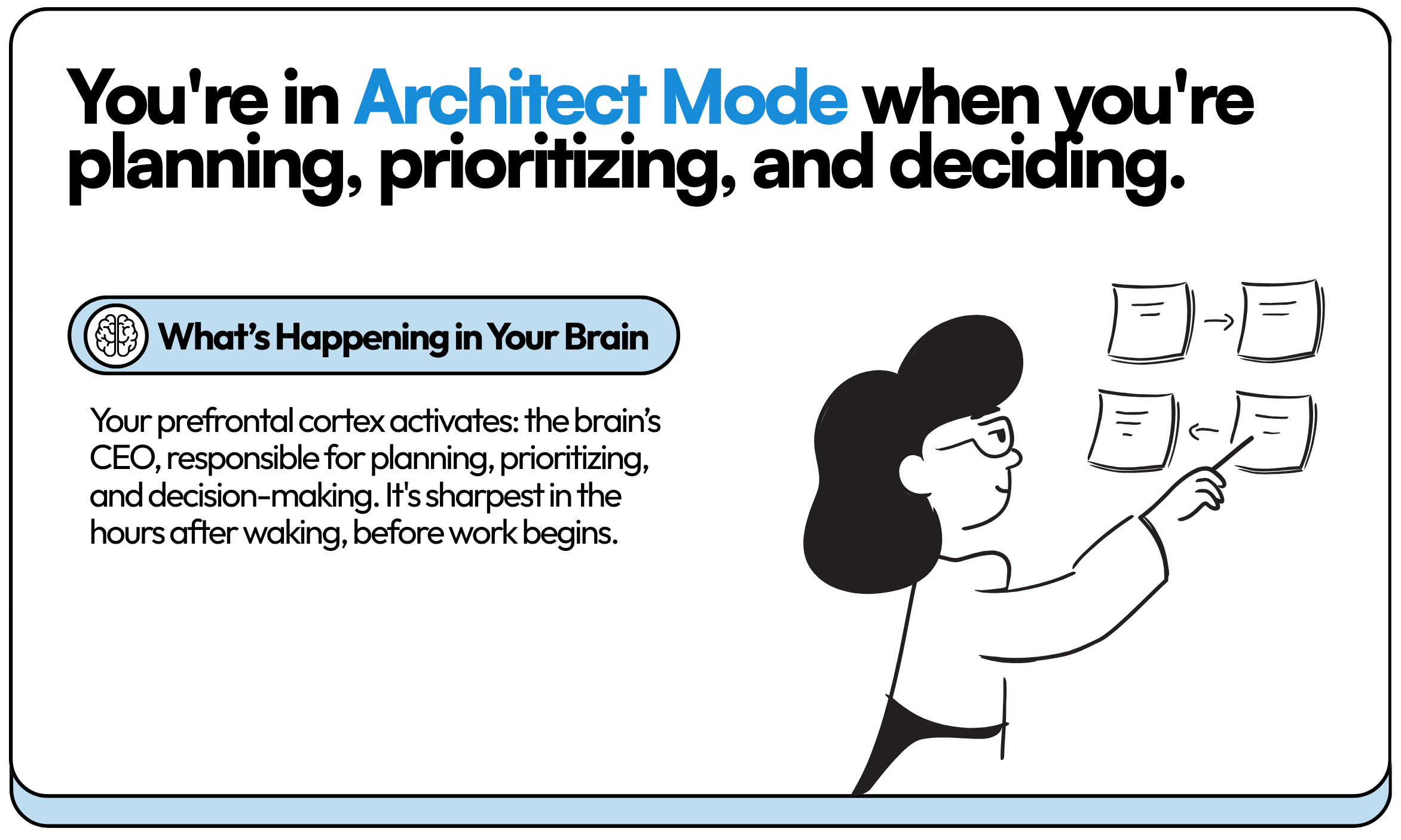
An educational poster with a cartoon illustration of a woman with black hair and glasses pointing at a whiteboard with four sheets of paper showing arrows, next to the text 'You're in Architect Mode'. The poster explains the brain's activity during planning and decision-making.

My Day Method™ helps you work with your brain’s natural rhythms to make the most of your day.
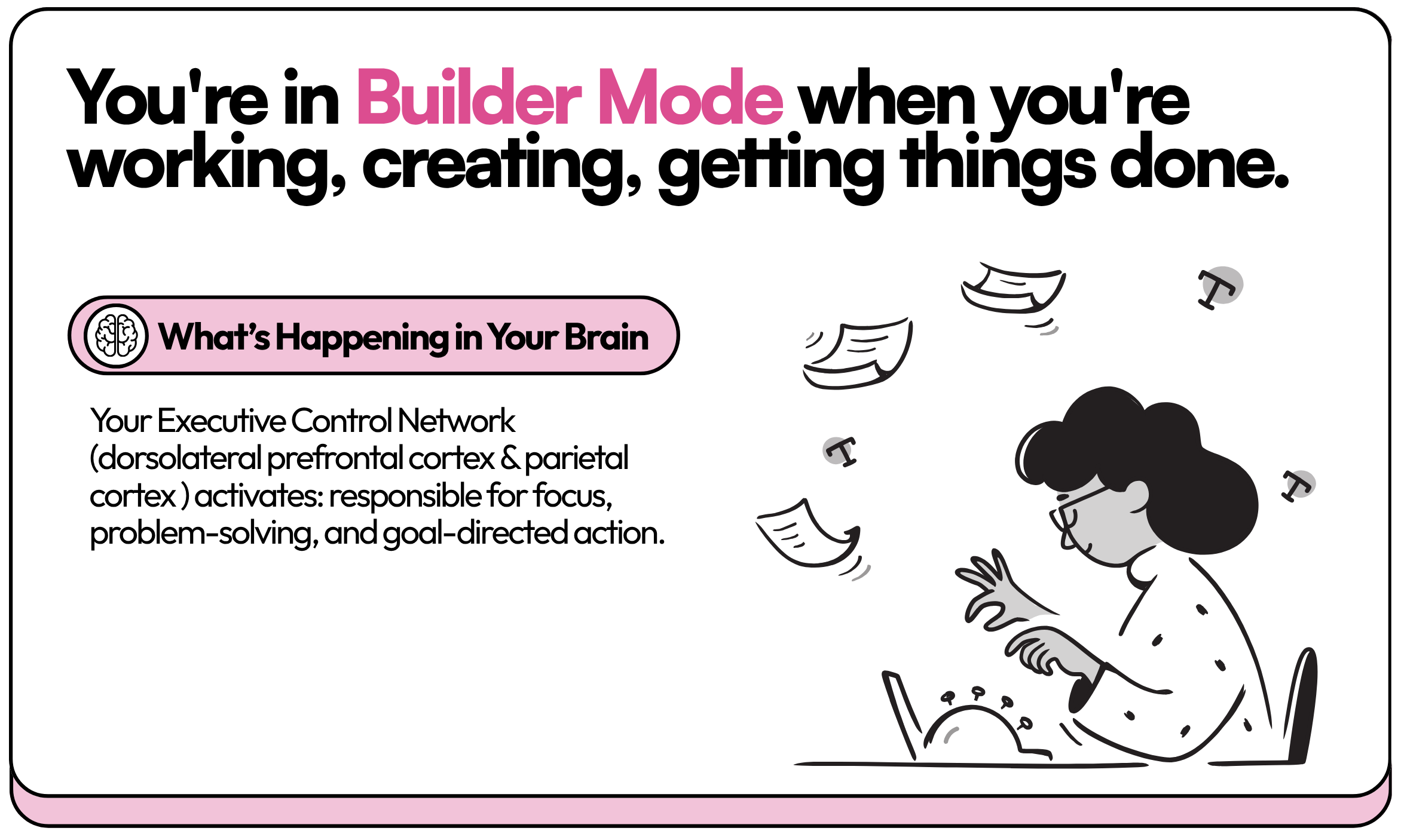
Illustration of a person in builder mode, focusing on creating and getting things done, with papers, a laptop, and a clock around them.
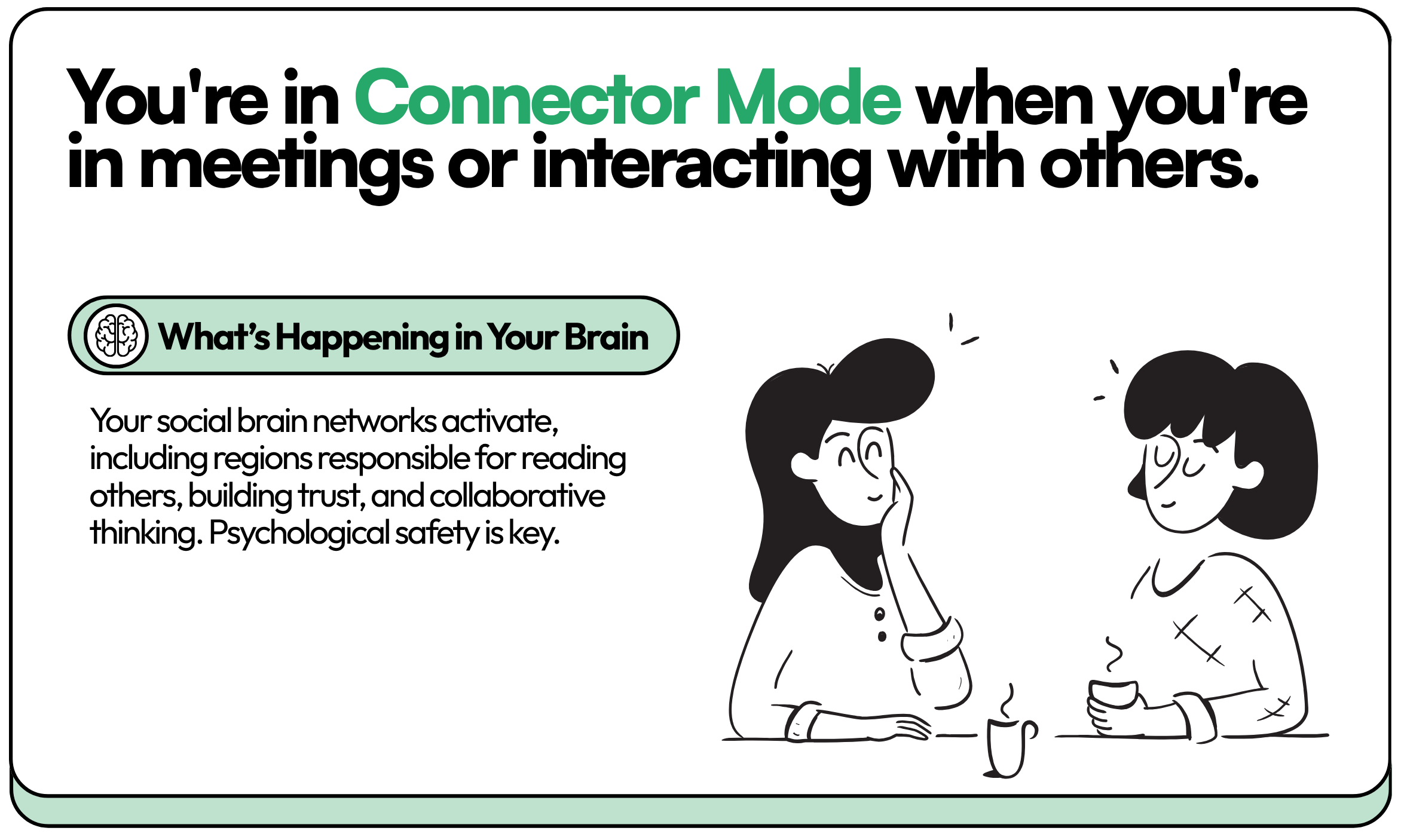
An illustration showing two women having a discussion. One woman is whispering to the other, who is listening with her finger on her ear. The image is part of an informational graphic about being in 'Connector Mode' during meetings, with text explaining how social brain networks activate during interactions.
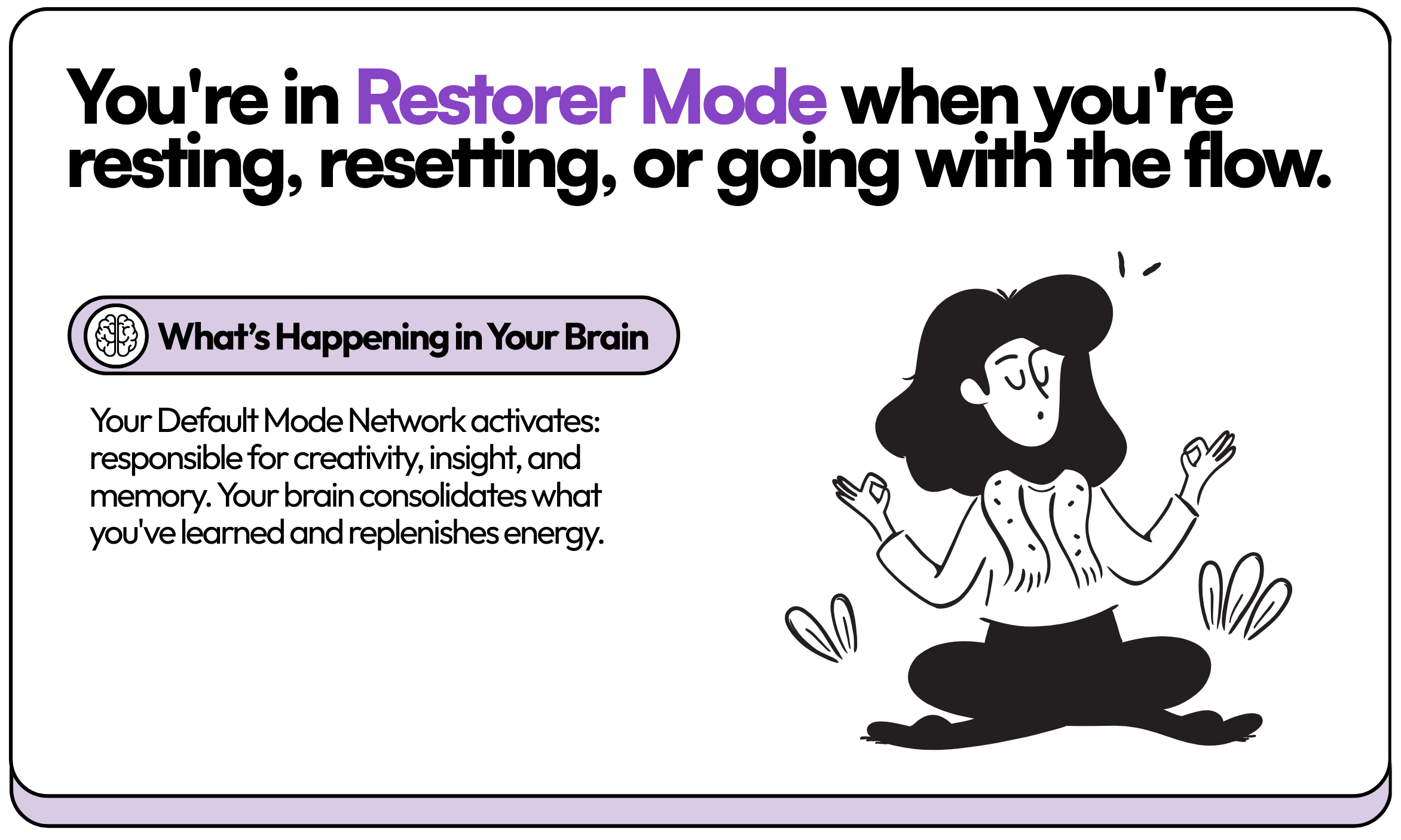
A motivational infographic with text about Restorer Mode and a black and white illustration of a woman meditating in a seated yoga pose with her legs crossed and hands in a mudra gesture, surrounded by small leaf illustrations.

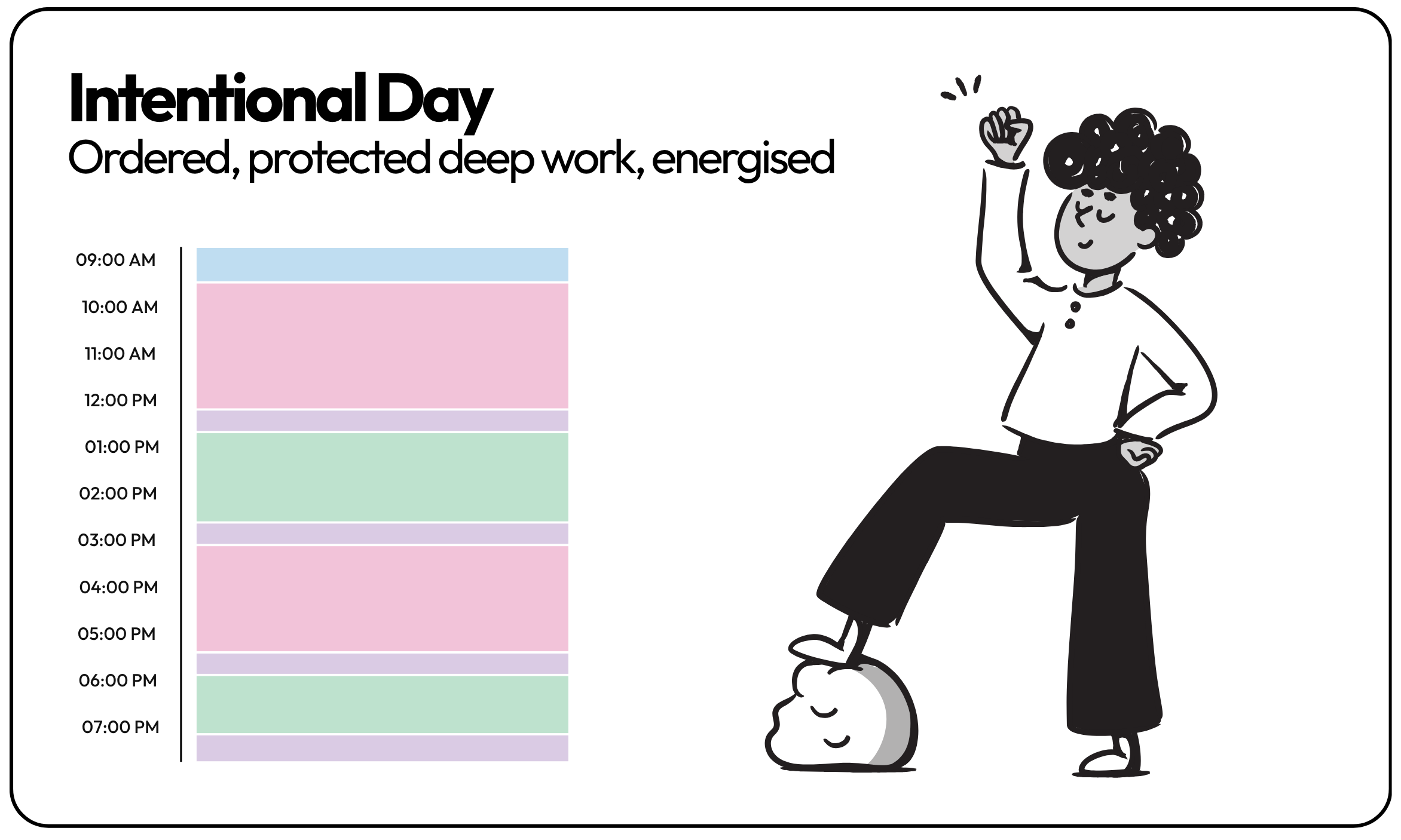
An intentional day leaves you energised and accomplished.

An unfocused day with constant mode switching leaves you feeling exhausted and frustrated.
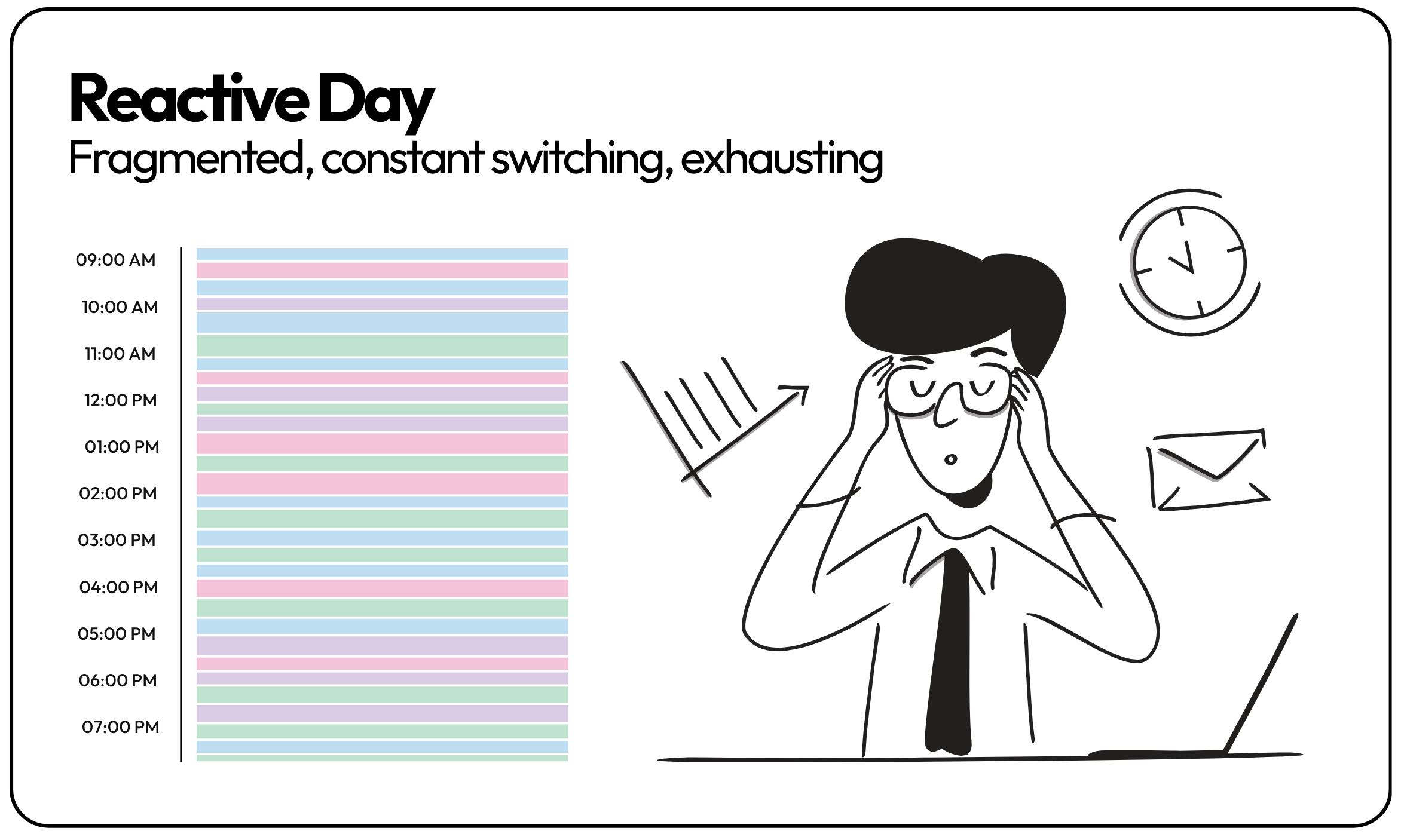
Digital illustration of a person holding their head, looking stressed, with a clock symbol nearby, next to a colorful chronological schedule from 9:00 AM to 7:00 PM titled 'Reactive Day' with the subtitle 'Fragmented, constant switching, exhausting'.
Diagram of a house with four roles: architect, builder, connector, and restorer, represented by icons for a compass, hammer, speech bubble, and sprouting plant.
Graphic design celebrating Intentional Day with a cartoon person standing confidently with a raised fist, and a schedule from 09:00 AM to 07:00 PM showing colorful blocks of time, alongside black and white illustrations of a person and a baby.

So how do you design a day that works with your brain? Meet My Day Method™
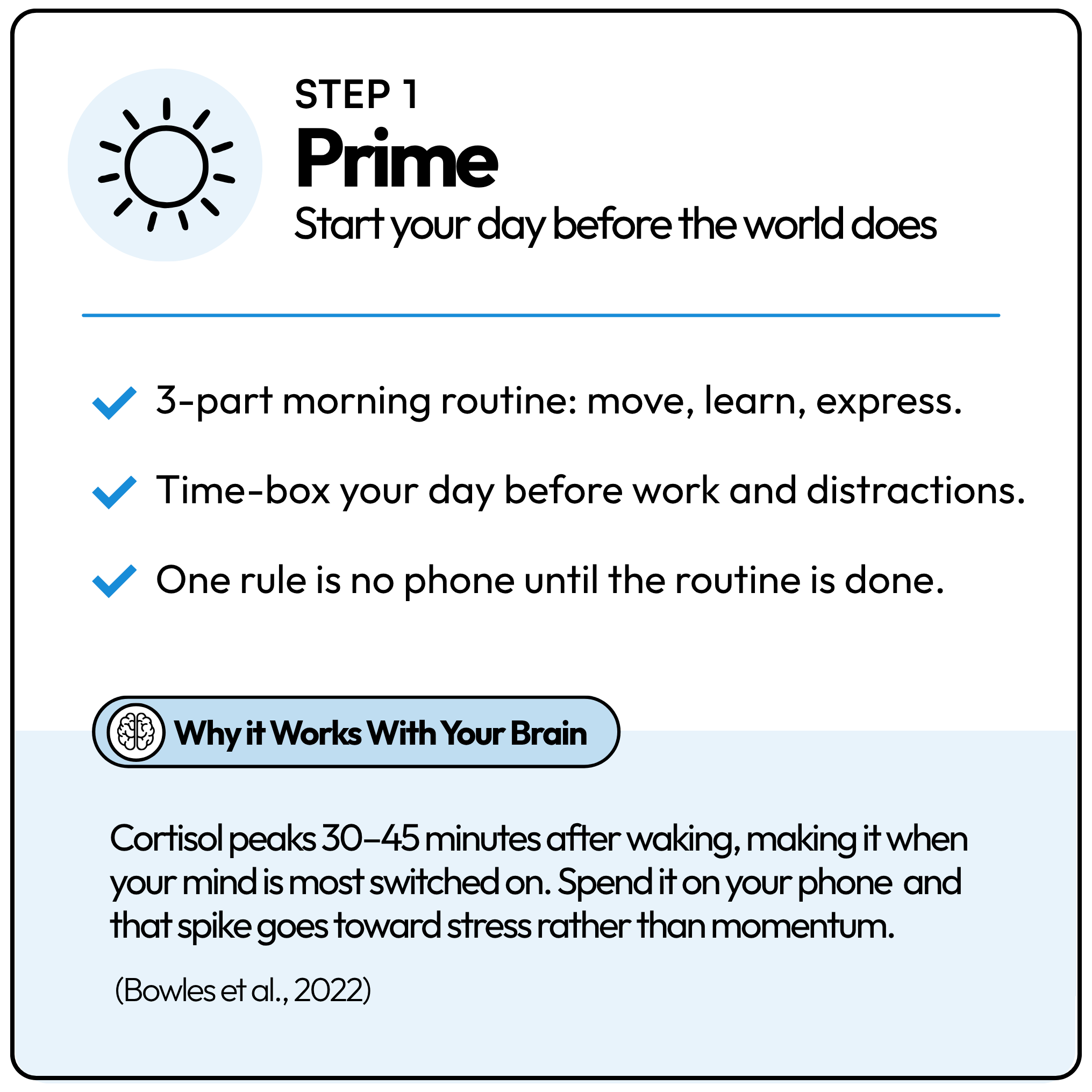
Diagram illustrating the effects of stress on the brain and body, with a focus on cortisol levels peaking 30-45 minutes after waking, and advice to manage stress by spending time on phones and avoiding spikes in stress.
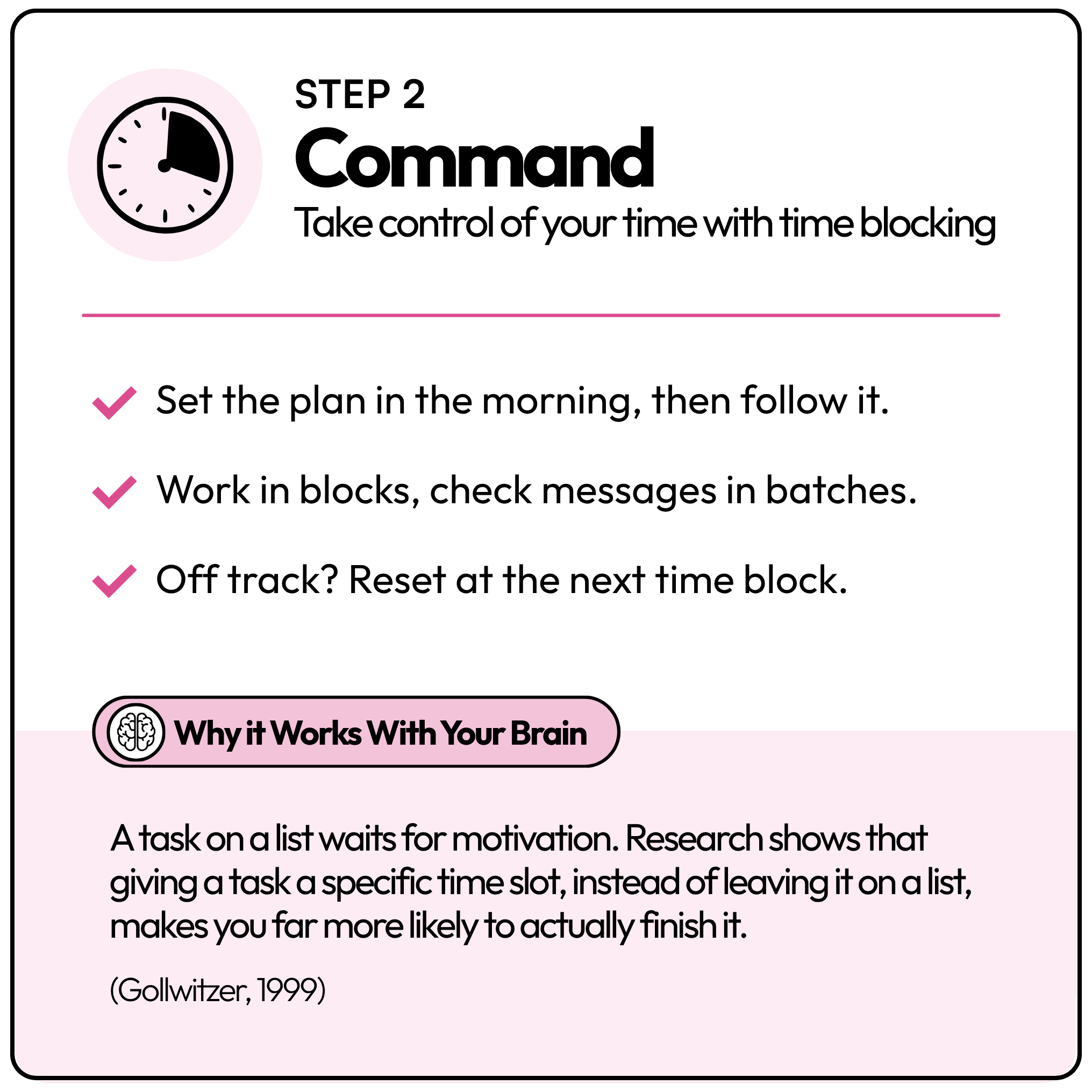
Illustration of a clock with a pink outline and black hands showing 3:00, along with text emphasizing the importance of giving specific time slots for tasks.
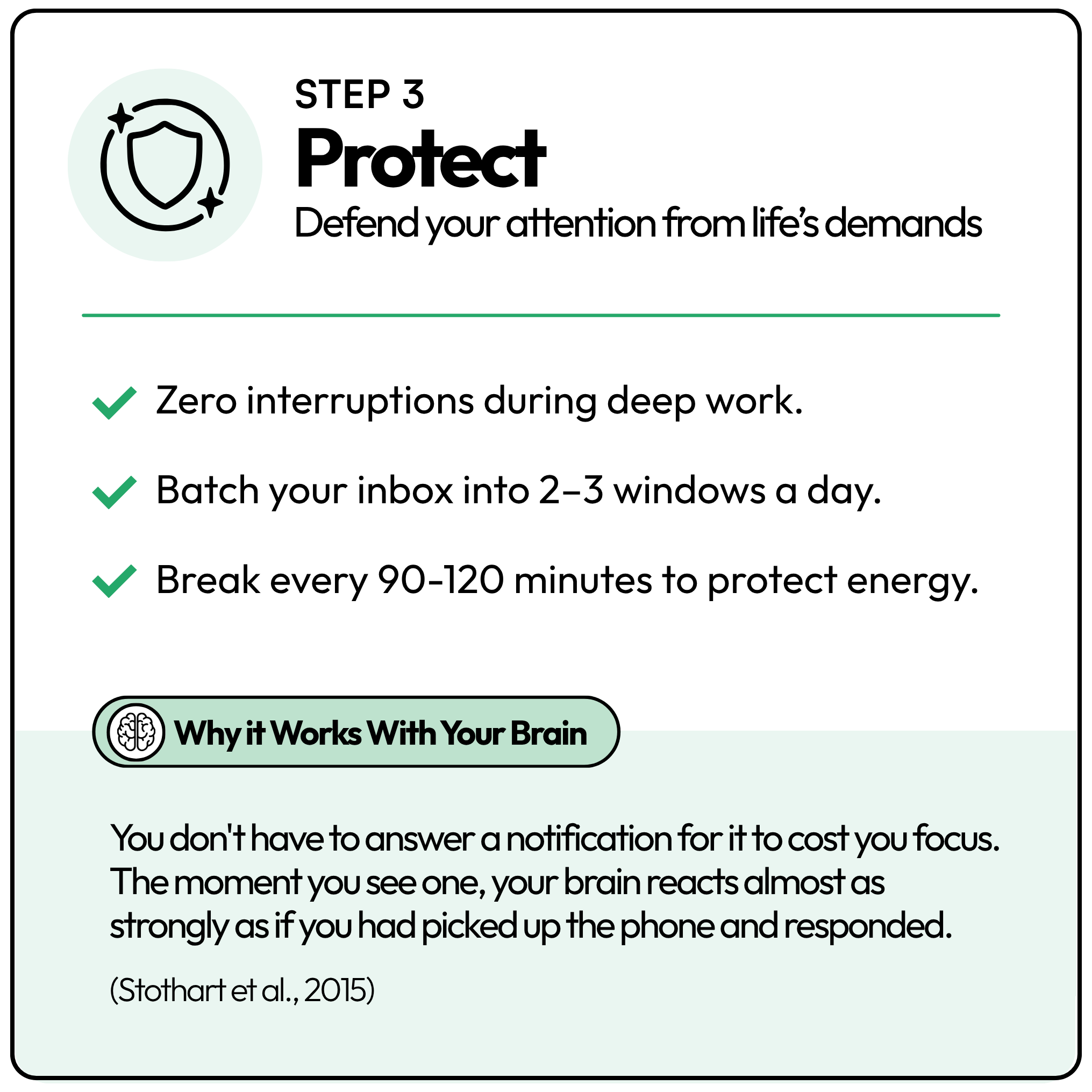
Infographic with a shield icon and the title "Why it Works With Your Brain" explaining the brain's response to notifications and the importance of focusing without interruptions.
Illustration of four people having a conversation, each with a speech bubble above their heads.

My Day Method™ trainings have helped people take control of their time and attention.

“The most useful training I've had in a very long time! I loved the email set-up and time-boxing the tasks in my calendar and I'll definitely be adopting the colour-coded calendar idea too.” Sandra

“The My Day Method™ session was brilliant. Loved the different approach to time management and couldn't wait to go and re-organise my diary using all the new concepts I had learned!” Kara

“Natalie did an AMAZING job, the feedback was just incredible. I can see already the impact that the My Day Method™ workshop has brought to our teams.” Alan

Help your team do their best work with energy to spare, book a My Day Method™ session:

Practical sessions to help your team plan with purpose, make room for focused work, and protect their attention.

Virtual Intro to My Day Method™ (Online)

A focused introduction to My Day Method™, with practical ideas to bring into your working day.

30 minutes · Online

In-Person Intro to My Day Method™ (London Only)

Explore the My Day Method™ together and learn how to apply it to your team’s working day.

60 minutes · London

My Day Method™ Workshop Series (Online and In-Person)

Tell us about your team and the challenges you’re facing. We’ll discuss workshop options to suit.

Options on Enquiry

Meet the sisters behind My Day Method™

Two women sitting at a table, engaged in conversation, with a steaming cup on the table between them.

Natalie Taylor spent most of her career in demanding leadership roles at American Express and Barclays. When she welcomed her first child in 2012, she wanted to give her growing family the same attention she had always given her work. Finding room for both meant rethinking how she organised her days.

She began developing a system that worked for her. Her curiosity about how the brain works led her to a master’s in the Neuroscience and Psychology of Mental Health at King’s College London, where she found insights that helped her refine her approach. She then began teaching it to others in corporate settings, helping them take greater control of their attention, energy and time.

The enthusiastic response encouraged her to take it further. In 2026, Natalie joined forces with her sister, Georgina, a brand strategist and designer, to bring the My Day Method™ to more people, from freelancers to senior executives. What started as a way to manage her own day was helping others change theirs.